
The World Cup Starts Thursday. Here's What It Takes to Win in the Fan Zone.
The FIFA World Cup 2026 kicks off June 11 in Mexico City - and for the next 39 days, billions of people will have soccer on their screens, on their phones, and on their minds. For brands, that's not just an opportunity. It's a test.
Fan fests, stadium concourses, city center viewing parties, branded pavilions across 16 host cities in three countries - the sheer scale of World Cup 2026 is unlike anything North America has seen in a generation. The question isn't whether your brand should show up. It's whether you can deliver something worth showing up for.
We've been doing this long enough to know the difference. Evolve has produced brand activations around MLS matches, CONCACAF tournaments, and major sporting tentpoles across markets - and we've earned some hard-won insight into what works, what falls flat, and what makes a fan stop mid-stride and actually engage with a brand.
This is what we know going into the biggest sporting event of our careers.
Why Sporting Events Are the Hardest Place to Do Experiential Well
Sports fans are not your average audience. They arrived for the game. The crowd is loud, the energy is chaotic, and every brand in the footprint is competing for the same finite attention. The conditions are hostile - and they don't care that you had a beautiful production deck.
At a typical experiential activation, a brand can create controlled conditions: lighting, flow, dwell time, signage placement. At a sporting event, especially one at World Cup scale, you're activating inside a variable no one fully controls. The venue changes. The footprint shrinks. The crowd behaves nothing like the planners predicted.
What that means in practice: your brand experience needs to be built for friction, not in spite of it.
The activations that work at major sporting events share three things: they're easy to enter, hard to walk away from, and built for a team that can adapt on the fly.
What We Built for Rockstar at MLS and CONCACAF - and What It Taught Us
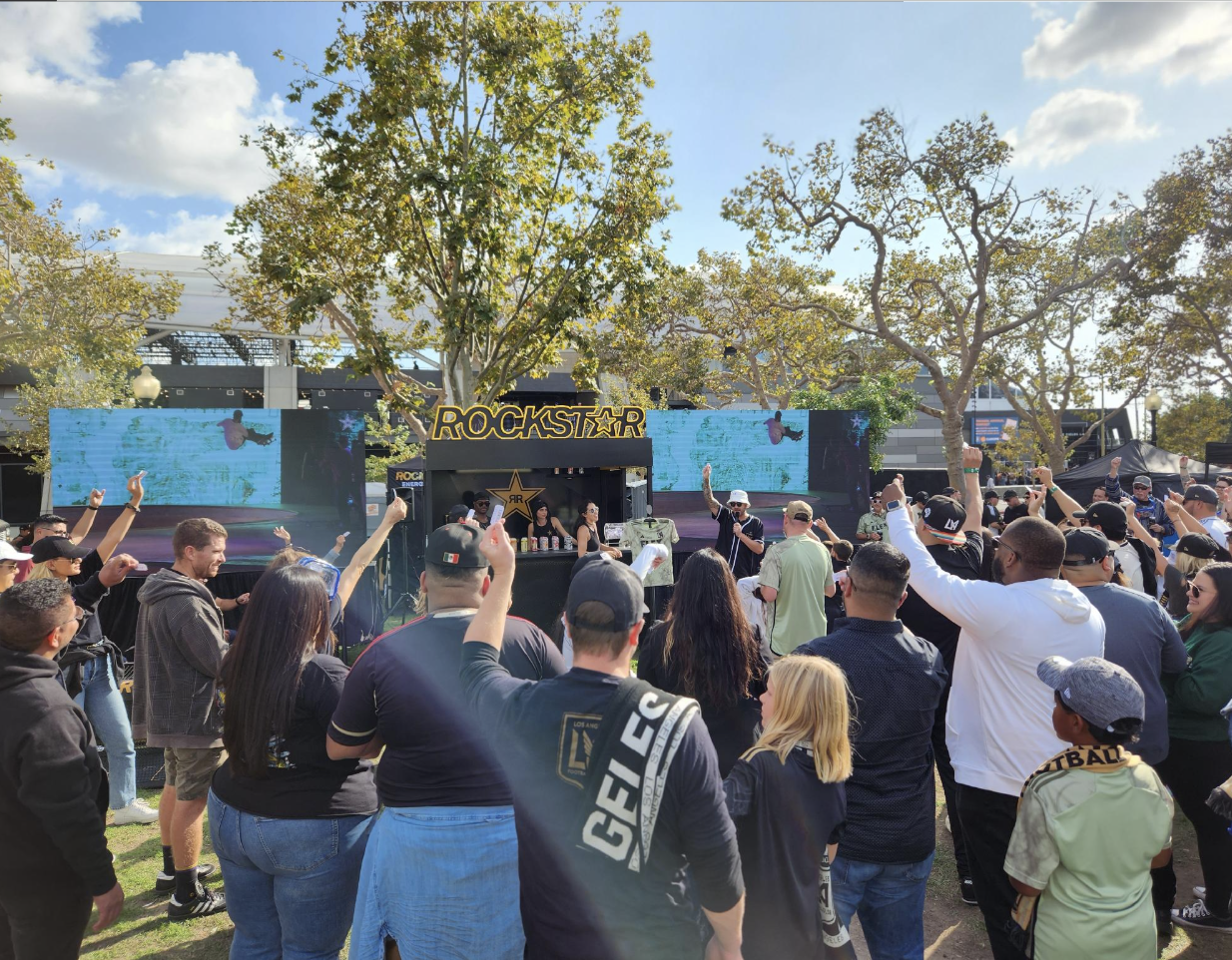
When Rockstar Energy came to us as a proud LAFC sponsor, the brief was clear: create something immersive and engaging for fans at BMO Stadium Fan Fests, across Los Angeles and Dallas. The activation needed to drive real dwell time, generate product trial, and feel like a natural extension of the fan experience - not an interruption of it.
What we built: a custom-fabricated sampling bar with branded walls, outgoing brand ambassadors trained to serve product alongside brand messaging, and a sub-soccer tabletop game mechanic that gave fans a reason to stay. Not just stop. Stay.
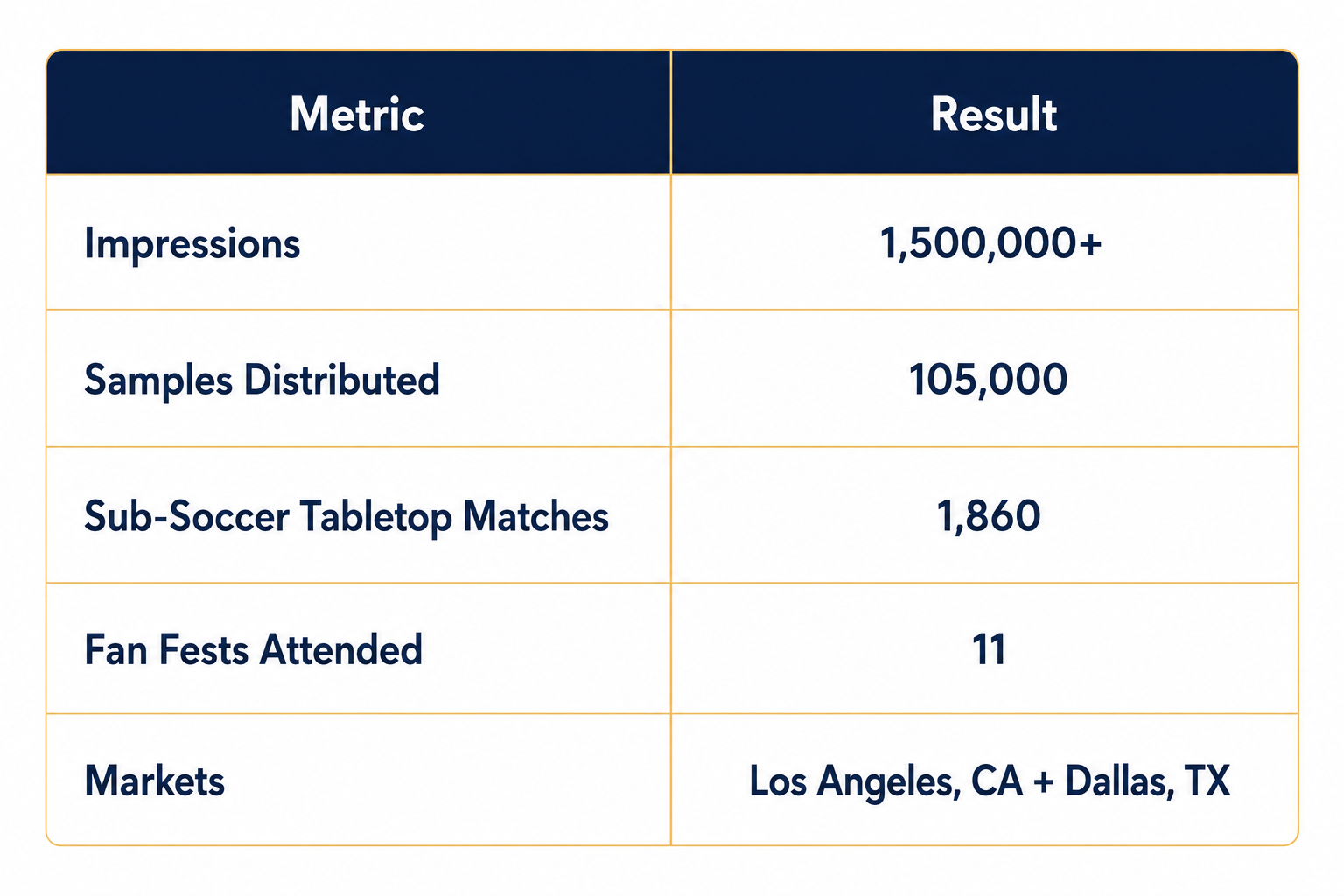
The results across 11 Fan Fests:
What the numbers don't show: the 72 hours of pre-event logistics, the brand ambassador briefings that happened in parking lots before gates opened, the on-site pivots when footprint conditions didn't match the approved floor plan. Those are the things that determine whether 105,000 samples get handed out with warmth and a story - or just handed out.
What a Soccer Crowd Actually Responds To
Soccer fan culture is specific. The community element is real - fans arrive together, move together, and respond to things that feel like they belong to the moment. Generic brand presence gets filtered out fast. What breaks through:
A mechanic that ties to the sport - game-adjacent interactions outperform passive sampling by a significant margin
Brand ambassadors who speak the culture, not just the product talking points
A footprint that rewards curiosity - something worth walking over to, not just a table with a tent
Sample delivery that feels like a gesture, not a transaction
The sub-soccer game we built for Rockstar wasn't a gimmick. It was a fan behavior insight applied to a product moment. Fans who played stayed longer. Fans who stayed longer sampled more and engaged more deeply with the Rockstar brand. That's not accidental architecture - that's experiential strategy applied to a fan culture context.
World Cup 2026: Why This Is the Activation Opportunity of the Decade
The scale of this tournament is genuinely unprecedented for North American brand activation. Consider what's in play:
48 teams across 12 groups - 104 total matches over 39 days
16 stadiums across the US, Canada, and Mexico
Official FIFA Fan Fests expected in host cities throughout the tournament
Massive secondary viewership markets - cities without games still have massive watch party infrastructure
First World Cup on North American soil since 1994 - a generation of built-up demand
For brands, that footprint isn't just a geographic opportunity. It's an attention window that doesn't close. From June 11 to July 19, soccer is the cultural conversation. The brands that positioned themselves inside that conversation - not alongside it, inside it - are the ones that will be remembered when the trophy is lifted.
The window to plan is effectively closed. The window to execute is open.
If you have sponsorship assets, sampling rights, or brand presence already secured around the tournament, the question right now is: how well is your on-the-ground execution actually built for this environment?
Activation Formats That Work in World Cup-Scale Environments
Different environments call for different approaches. Here's how we think about format selection at major sporting tentpoles:
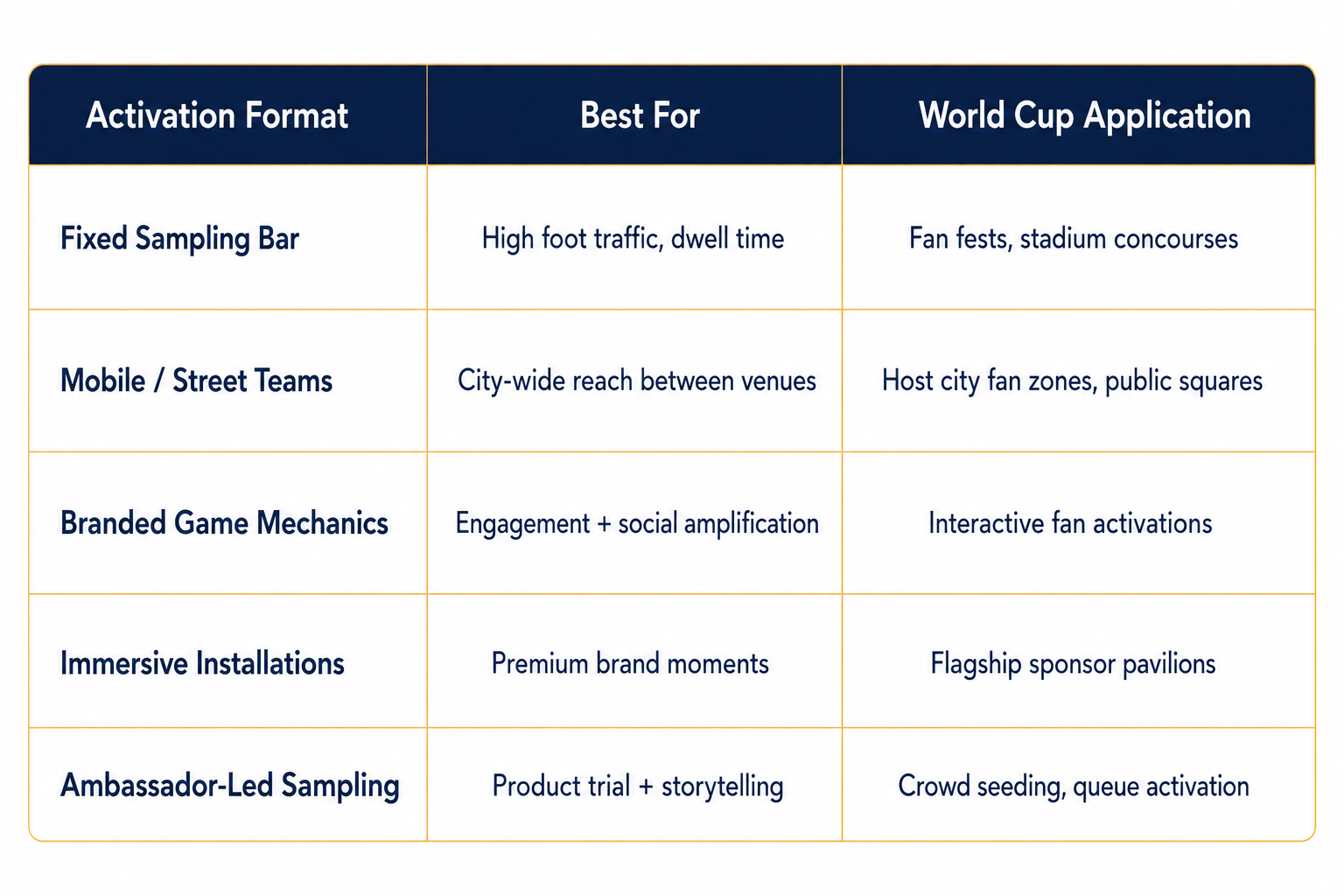
The mistake most brands make is picking a format first and then trying to fit the strategy to it. The right call is to work backward from the fan behavior you're trying to create, the product story you need to tell, and the logistical reality of the environment - and then select the format that can actually deliver all three.
The Production Reality Nobody Puts in the Brief
A World Cup fan zone isn't a controlled environment. It's 30,000 people, variable weather, changing footprint conditions, venue staff who have their own priorities, and a countdown clock that doesn't pause for anyone.
The production lessons we've learned running activations inside major sporting events:
Brief your team for the chaos, not just the plan
Your brand ambassadors need to know what the activation is trying to accomplish well enough to make good decisions without supervision. When the footprint is half the size you expected, when the crowd is moving differently than projected, when the sample count is running low at hour two of a four-hour activation - you need a team that can adapt without breaking character or losing the brand intention.
Pre-solve the problems you know are coming
Weather contingency. Load-in delays. Venue access conflicts. Permitting gaps. These aren't edge cases at major sporting events - they're standard operating conditions. The agencies that consistently deliver at this level are the ones who have already made the hard decisions before they get to site.
Build the experience for the first guest and the ten-thousandth
The energy at minute one of a fan fest and minute four hundred is completely different. Your activation needs to perform across that full arc - which means staffing structure, sample logistics, game mechanic durability, and signage all need to account for wear, crowd fatigue, and a team that has been standing for eight hours.
What Brands Miss When They Sponsor Without an Activation Strategy
Sponsorship buys presence. Activation earns attention.
The gap between those two things is where most sports marketing investment either compounds or evaporates. A logo on a banner inside a stadium reaches the people in that stadium. A well-executed fan zone activation with product trial, engagement mechanics, and trained brand ambassadors reaches those same people - and creates a memory, a physical product interaction, and a brand association that the logo alone never could.
Experiential Marketing ROI in 2026: What Brands Are Finally Getting Right
The brands that consistently win at sporting events aren't the ones with the biggest sponsorship packages. They're the ones who treat activation as a creative and production discipline - not as a logistics checkbox.
Frequently Asked Questions
How far in advance do brands need to plan World Cup activations?
For major tournament activations, 90 to 120 days of lead time is the realistic minimum for custom fabrication, permitting, staffing, and training. For World Cup 2026 specifically, most official fan zone footprints are already allocated - but brands with sponsorship assets and direct venue access still have execution runway if they move now.
What's the most important element of a successful sports event activation?
Staffing, consistently. The physical structure creates the opportunity; the people create the experience. Brand ambassadors who understand the product, speak the culture, and can adapt in real time are the variable that separates activations that perform from activations that just exist.
Can smaller brands compete with major sponsors at events like the World Cup?
Yes - and often more effectively. Smaller brands tend to take more creative risks and build tighter, more specific fan experiences. Official sponsors often have the biggest footprints and the most generic activations. Differentiation is available at any budget level; it requires smarter concept development and sharper execution, not more square footage.
What makes product sampling work at high-traffic sporting events?
Speed of entry, warmth of interaction, and a reason to engage beyond the sample itself. Fans at sporting events are moving. Your sampling mechanism needs to fit into that movement - not stop it. The best sampling activations at sporting events create a moment of real human interaction around the product, not just a hand-to-hand exchange.
What Separates a Great Sampling Partner From Everyone Else
The Brands That Will Win World Cup 2026 Are Already on the Ground
The tournament is two days away. The planning window is closed for most brands. But the execution window - the opportunity to deliver something that actually moves people - is wide open for the next 39 days.
The brands that earn the most from this moment won't be the ones with the most prominent sponsorship placement. They'll be the ones whose teams show up prepared, adaptable, and genuinely invested in creating something worth experiencing.
We've been in those fan zones. We know what it takes to build an activation that survives first contact with a 50,000-person crowd and still delivers the moment.
Ready to talk about what's possible - for World Cup 2026 or the next big moment on your calendar? Let's make something worth showing up for.
